


Thomas Struth

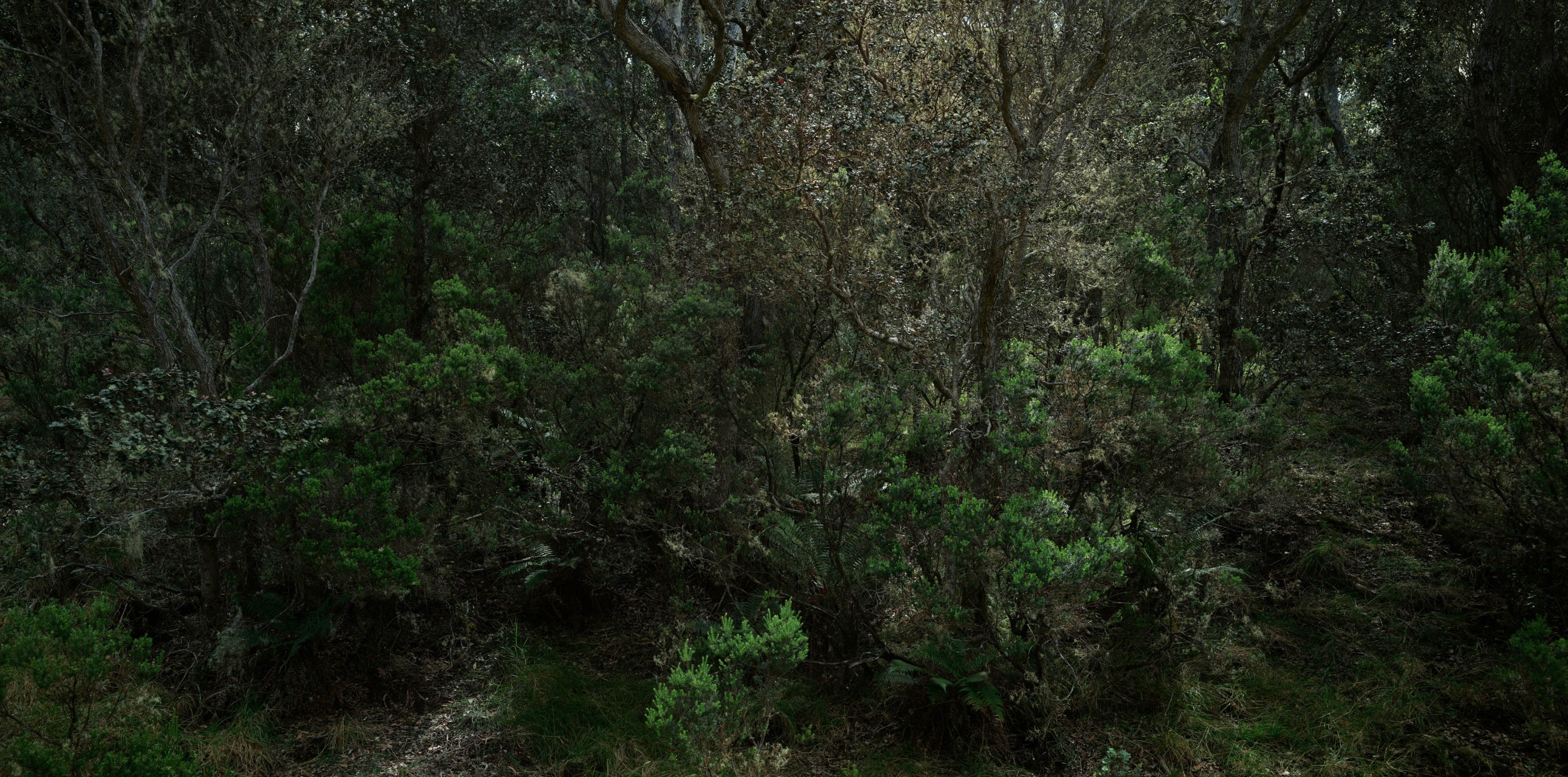
01 | Hinakapoʻula, Hawaiʻi 2024 | ©Thomas Struth
Seeing as an Act of Understanding
Thomas Struth is a photographer of precision in the truest sense. Each image is the result of an almost architectural clarity of thought. Working often with large format cameras, he constructs photographs that reveal themselves gradually, layer by layer.
Born in 1954 in Geldern, Germany, Struth studied at the Kunstakademie Düsseldorf under Gerhard Richter and later Bernd and Hilla Becher. This dual influence remains visible. A sensitivity to pictorial composition paired with a rigorous, analytical approach to the world. From the beginning, his work has followed a consistent pursuit: understanding.
Between Stillness and Complexity
Struth’s early body of work Unconscious Places established his voice with quiet yet powerful images of empty urban streets. These works hold a subtle tension. They appear objective, almost neutral, yet carry a deep psychological presence.
Over time, his practice expanded into a number of distinct bodies of work. Family portraits that explore identity and connection. Museum photographs that reflect on the act of looking itself. Landscapes that evoke both untouched nature and human absence. And later, images of industrial and technological environments that question progress and its consequences.
Across all these groups of works, a constant remains. A dialogue between what we see and how we see.
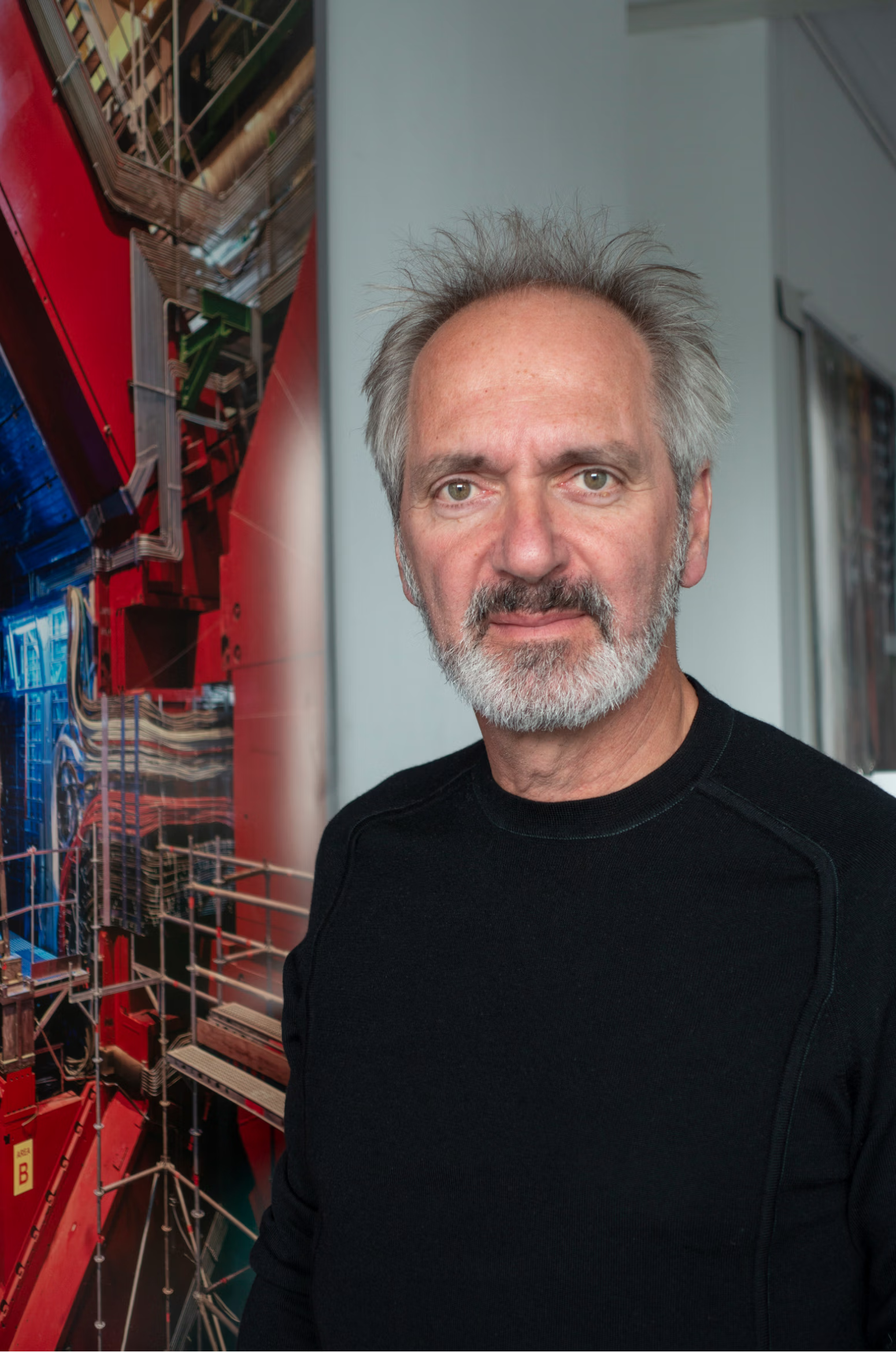
02 | THOMAS STRUTH | Photograph by Vanessa Enders

03 | Schlichter Weg, Feldberger Seenlandschaft 2021 | Installation view, Courtesy Galerie Max Hetzler; Photo: def image
The World as a Layered System
Struth’s photographs reveal the invisible structures that shape contemporary life. Social, cultural, technological. His images of research facilities, surgical environments and industrial sites open spaces that are rarely accessible. They confront us with the scale and complexity of human invention. At the same time, his work retains a sense of contemplation. A stillness that allows the viewer to navigate these dense visual fields. Meaning emerges through attention. Not through explanation. This balance between clarity and ambiguity defines his work. It invites interpretation without imposing it.

04 | The Metropolitan Museum of Art (Diptych, LEFT & right panel), New York 2023 | Installation view, Courtesy Galerie Max Hetzler; Photo: def image
Thomas Struth’s contribution to contemporary photography reaches far beyond individual images. His large scale works have played a decisive role in establishing photography as a central medium of contemporary art. His photographs are neither documentary nor purely conceptual. They exist in a space between. A space where observation becomes reflection and where images transform into experiences. His work is held in major museum collections worldwide, including the Metropolitan Museum of Art, MoMA, Tate and Centre Pompidou.
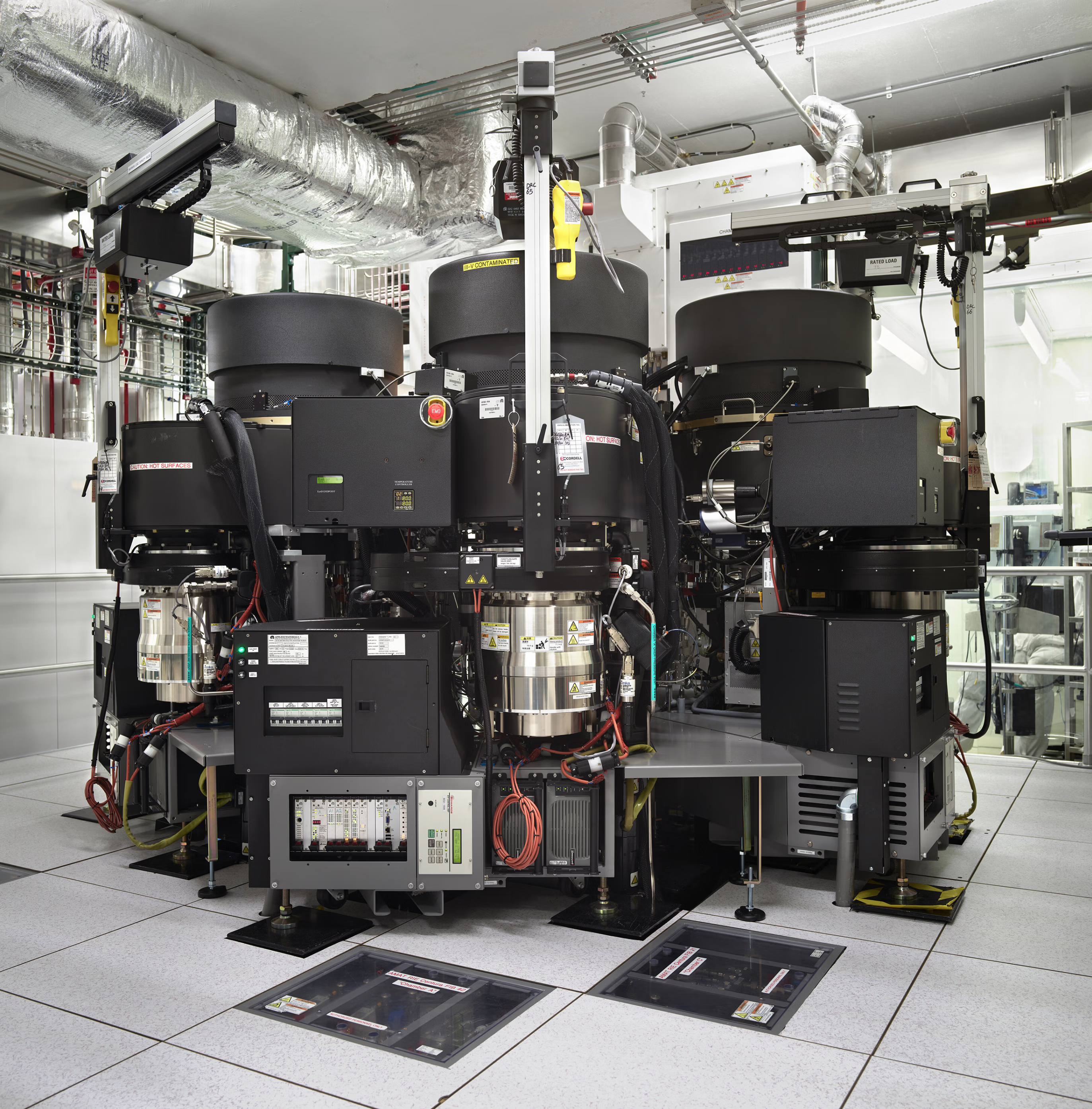
05 | Processing Tool, IBM, Yorktown Heights 2022 | ©Thomas Struth
A Practice of Continuous Inquiry
Struth’s work evolves through curiosity. Each new group of works expands his visual language while remaining grounded in a consistent intention. To question how we relate to the world and how images shape that relationship.
He approaches photography as a form of thinking. A way to engage with reality in its full complexity. Technical, emotional, cultural.
Or in his own practice: to stop the movement of the world for a moment and allow something essential to appear.
06 | TO KEEP THINGS FROM DYING, 2023 | ©Louisiana Channel, Louisiana Museum of Modern Art, 2023
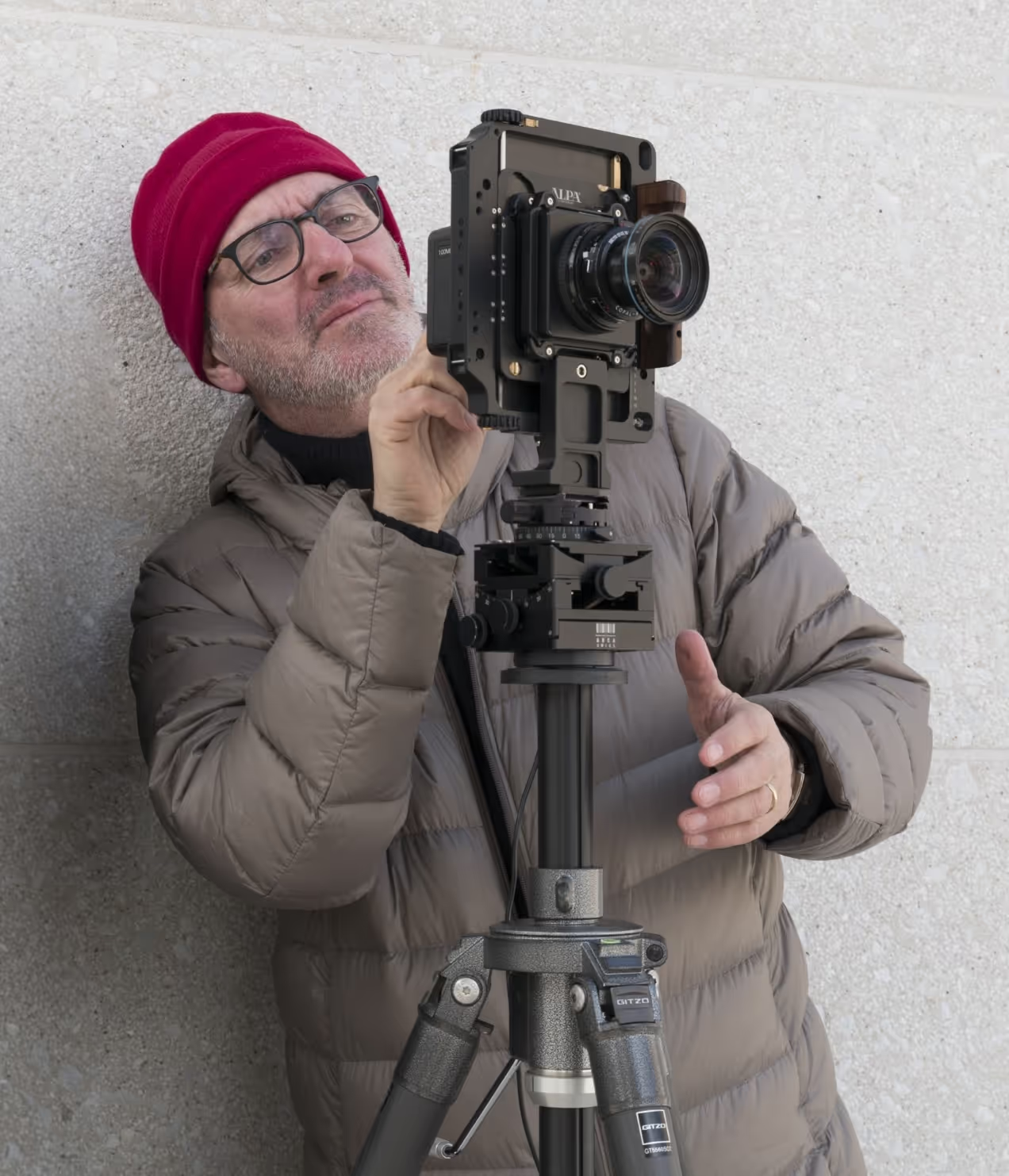
"Starting as a painter in my early days, I was already used to the lengthy process of creating a picture. And that’s what I’m still doing."


Überlandstrasse 241
8600 Dübendorf
Switzerland
Phone: +41 44 383 92 22
@2026 all rights reserved

PRECISION MEASURED IN MICRONS. PASSION MEASURED IN DECADES